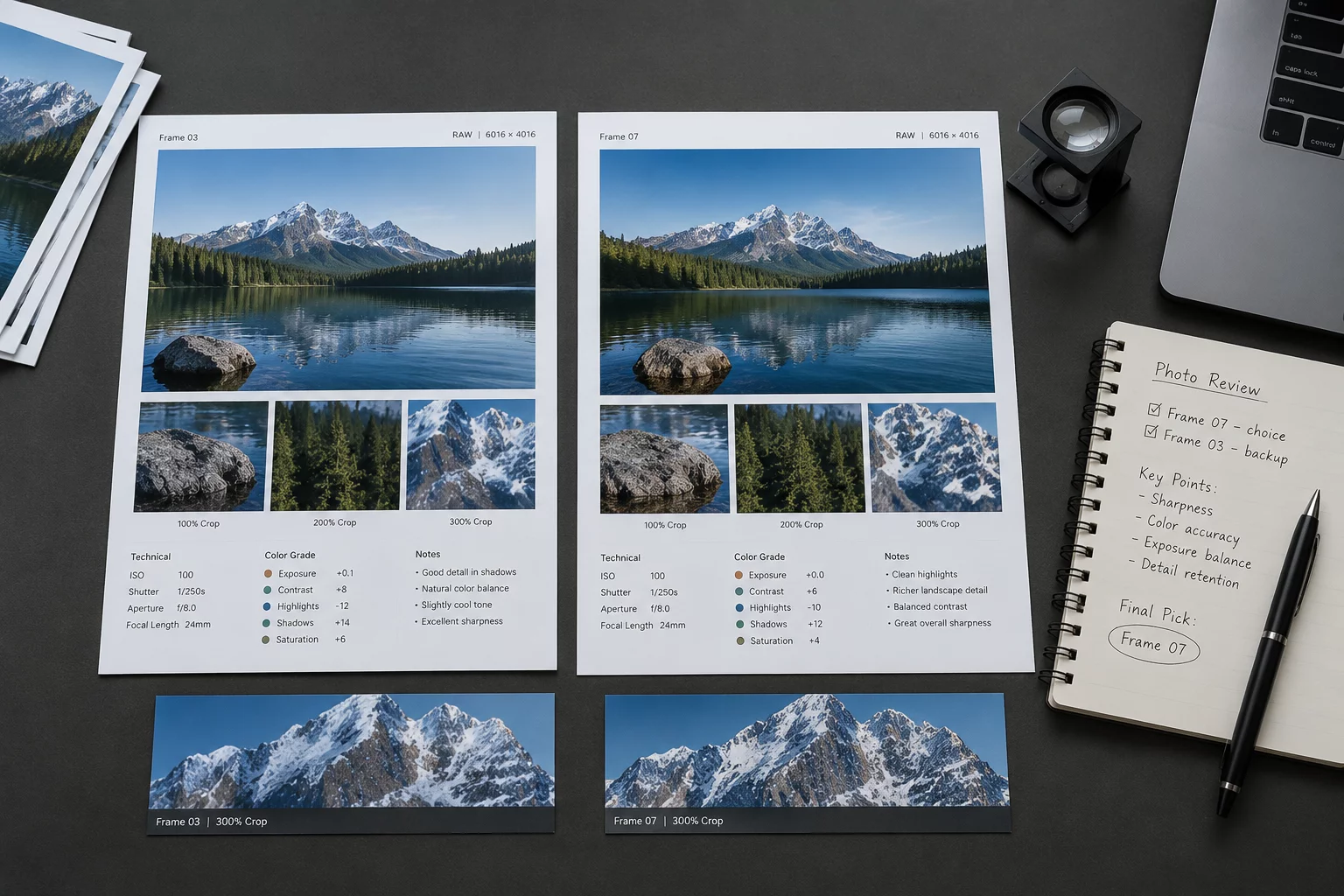
When brand stakeholders review first-round proofing collections, their criticism often condenses into vague emotional shorthand such as "it feels too stiff" or "the mood does not quite click." Treating these remarks as erratic whims invariably traps the studio in circular revision rounds. Systematic curation deconstructs abstract impressions into tangible physical markers: pupil aperture diameter, cervical spine curvature, shoulder girdle tension, and key-to-fill luminance ratios.
Commercial ambiguity generally emerges when disparate corporate departments review the contact sheet through contradictory lenses. Legal compliance evaluates logo legibility, digital marketing scouts negative space for mobile headline containers, and brand guardians focus on talent approachability. Categorizing every feedback comment against an explicit diagnostic layer isolates real editorial barriers from cosmetic taste disputes.
Diagnostic Translation Matrix
- Comment: "Feels Too Stiff"
- Micro-tension along masseter jaw muscle, locked collarbone plane, or clenched interphalangeal knuckles.
- Comment: "Lacks Energy"
- Decelerating heel-strike in walking cadence, downward gaze vector, or limp garment drape along seamlines.
- Comment: "Off-Brand Mood"
- Key-to-ambient contrast spread exceeding 1.2 EV, color temperature drifting past ±150K, or specular flare on product logo.
- Comment: "Looks Too Busy"
- High-contrast background tangencies within 12% margin of subject silhouette, or competing specular highlights.
Rather than flooding the client with fifty fresh unrated options, route every disputed frame through three rigorous validation checkpoints. This audit sequence equips digital technicians and lead curators with unified terminology before re-submitting candidate frames to external review:
- Anatomical Kinetic Audit: Magnify iris catchlights, inspect corner-of-mouth micro-smiles, and verify natural wrist curvature at 100% loupe magnification to eliminate mid-blink or tense transition frames.
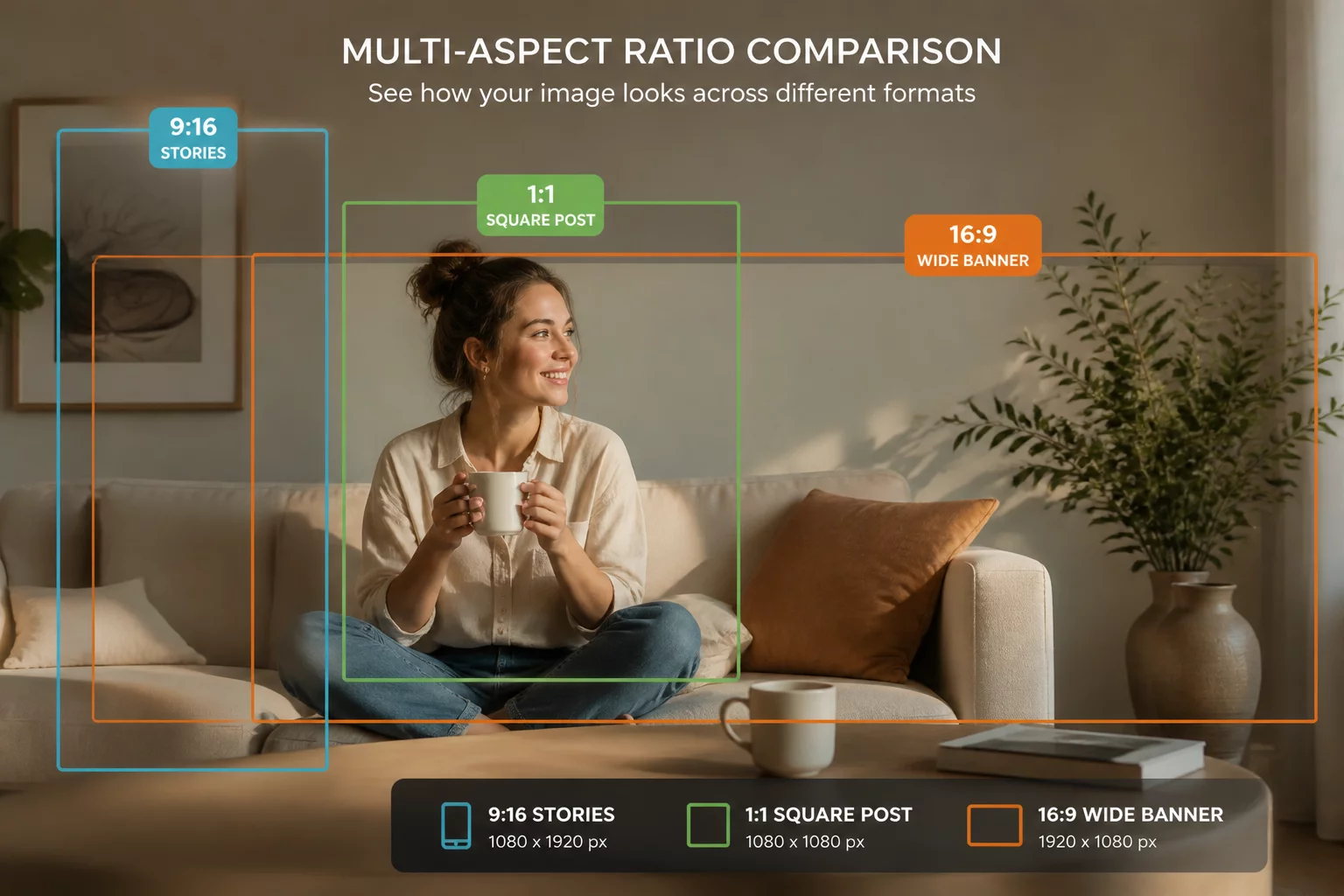
- Spatial Layout Clearance: Verify crop headroom for multi-channel digital banners (16:9, 4:5, 1:1), ensuring brand copy areas remain unencumbered by background distractions.
- Photometric Consistency Check: Measure skin tone chromaticity and background exposure continuity across candidate burst sequences to ensure visual coherence with previous approved selects.
By annotating substitute frames with specific optical observations, the curator transforms an emotional argument into a straightforward professional comparison. The client immediately recognizes whether Frame C resolves their reservation without destabilizing campaign continuity.
Presenting broad galleries in response to rejections almost always triggers additional vague critiques. The curator should instead deliver an alternate set containing exactly two distinct solutions: one direct corrective variant addressing the exact identified flaw, and one measured contextual frame balancing warmth with composition.
Tag each candidate with standardized color flags and descriptive IPTC metadata before export. This structured discipline builds an audit trail across review phases, documenting precisely why certain burst frames were retired during the expression pass while specific hero selections advanced to retouching.
Apply these selection questions in your workspace: Selection Passes and Variants in Capture One.
Capture One Selection Passes Guide
Review detailed keyboard shortcut mappings, color flag taxonomies, and variant staging rules built for high-throughput commercial culling.
Structuring First Round Proofing Galleries for Brands
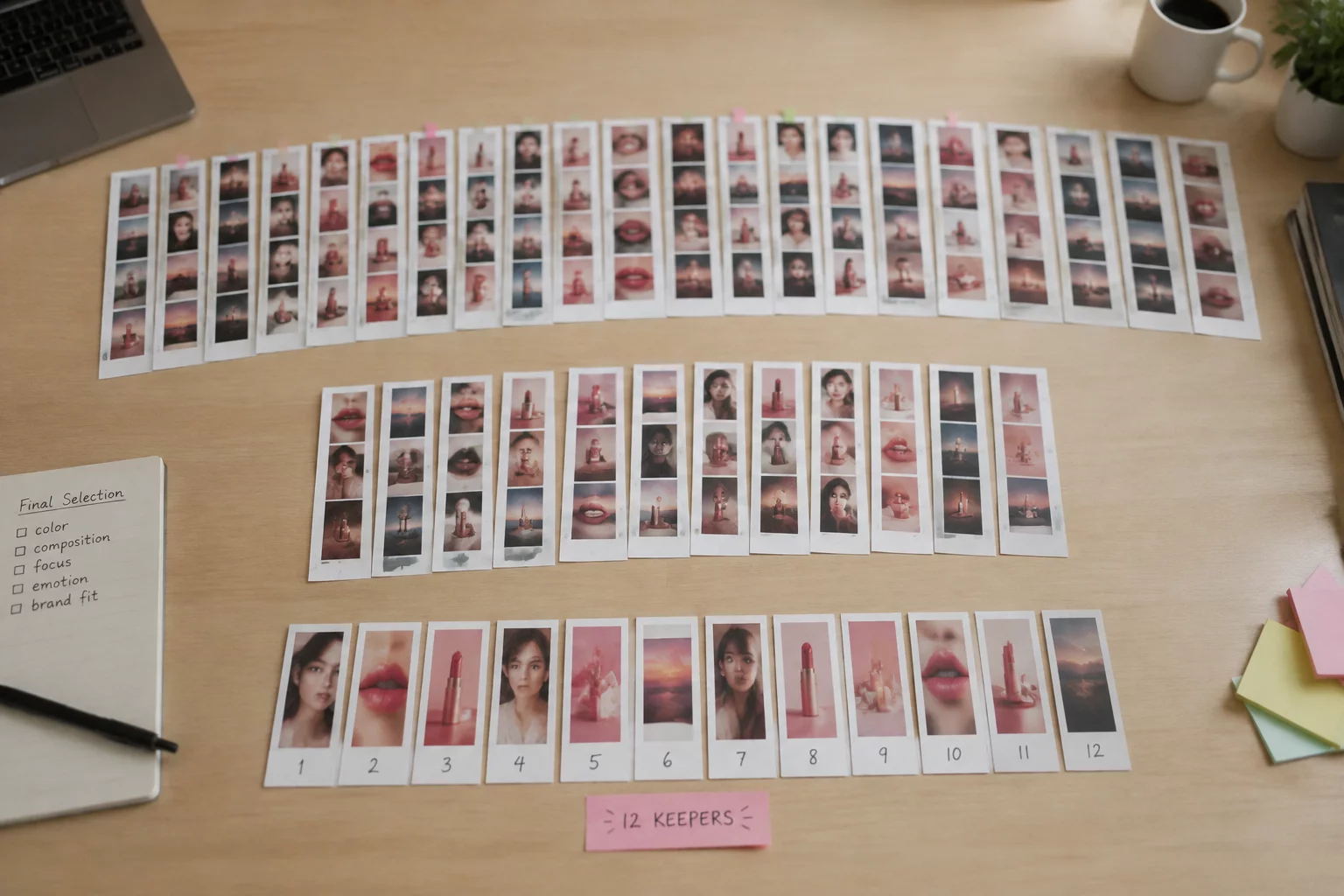
Narrowing 500 Editorial Frames Down to 12 Hero Selects
Building Non-Overwhelming Commercial Review Collections
Elena Rostova
Lead Commercial CuratorMapping the phrase "lacks authenticity" specifically to eye aperture and neck relaxation stopped our endless second-round culling loops. On our recent retail apparel shoot, presenting two verified alternates rather than thirty loose RAWs closed the client review in twenty minutes.