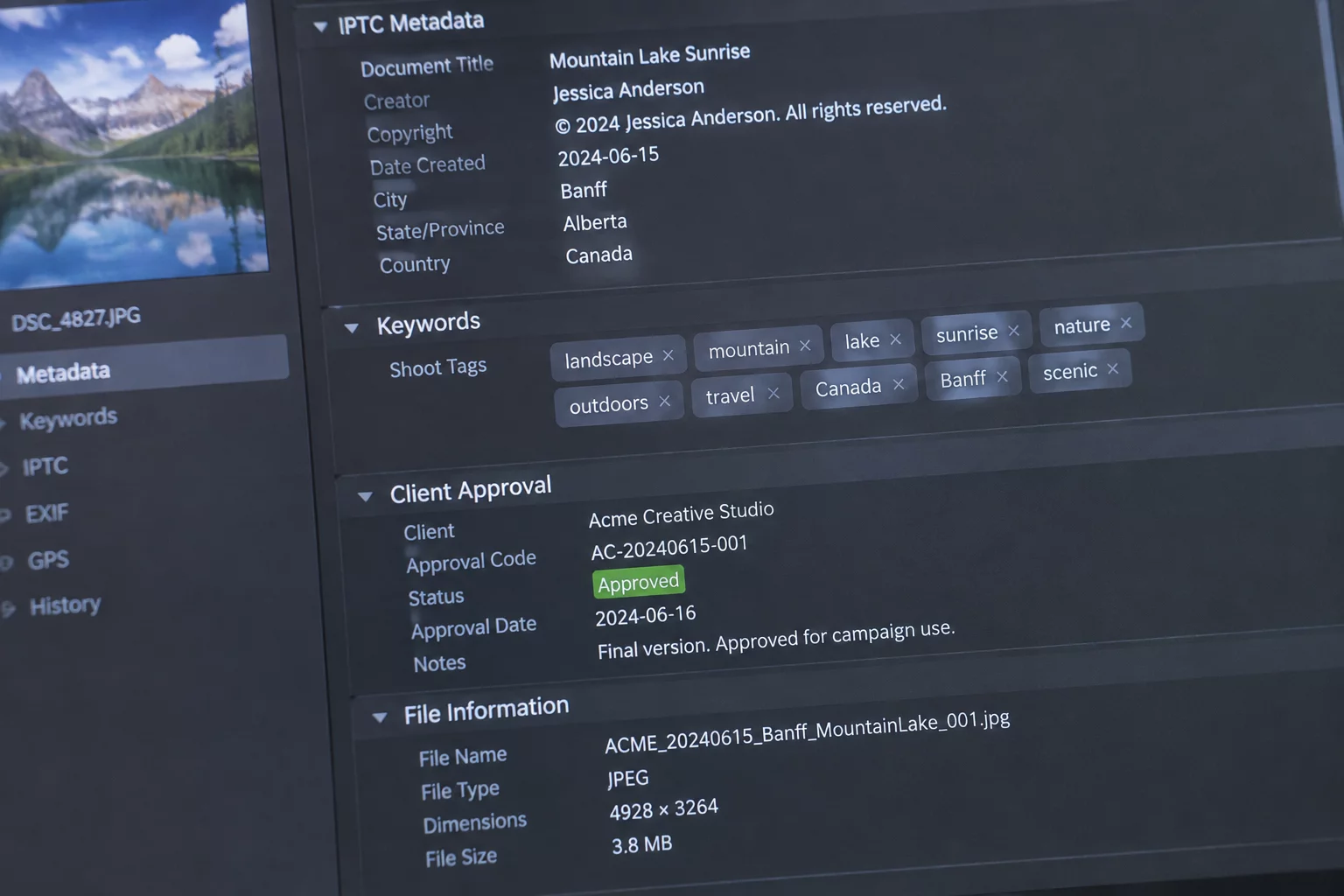
Once a client confirms their hero selects from a reviewed shortlist, the triage workflow exits its evaluation mode and enters preservation. At this critical juncture, temporary color flags and star ratings must translate into durable metadata fields. Relying solely on catalog-level database entries risks total loss if the catalog corrupts or software migrations occur later down the road.
Writing directly to XMP sidecars or embedding synchronized IPTC data blocks ensures that usage rights, approval dates, licensing scope, and subject taxonomies remain attached to the raw files. This practice creates an unambiguous historical record that independent digital asset management systems can index immediately without manual re-culling.
Archival Verification Standards
- Synchronization Method
- Synchronized XMP Sidecars & Embedded IPTC Core
- Curation Stage
- Post-Client Selection Signoff (Pass 6 Exit)
- Naming Protocol
- ISO-Date_ClientCode_JobType_FrameSequence
- Storage Persistence
- Read-Only Verified Deep Cold Storage Tier
Every confirmed select receives an injected batch preset that stamps essential project parameters before cold-storage migration. Curators execute this pass using batch metadata inspectors to eliminate typographical errors and ensure searchability across enterprise archives:
- IPTC Core Rights Specification: Stamping creator, copyright holder, credit line, and specific licensing parameters directly into metadata headers.
- Approval State Keyword Tagging: Injecting hierarchical tags including approval milestone, selection wave identifier, and signed usage tier.
- Original Capture Link Preservation: Retaining original camera frame numbers inside archival tracking fields to retain lineage back to the raw capture folder.
Following this structured insertion, curators force a manual metadata sync to disk. This confirms the physical sidecar files update their timestamps and checksums before the session enters cold packaging.
In high-volume commercial production, clients frequently request secondary crops, alternate color passes, or licensing renewals months or years after original delivery. Without robust archival metadata on the raw files, retrieving the exact keeper among thousands of unrated outtakes consumes hours of manual search time.
Tagging final selects with structured provenance keys bridges studio delivery and long-term asset discovery. Studio leads quickly verify that every delivered master links directly to its parent raw frame, preserving edit history, color grading recipes, and client sign-off records.
Apply these selection questions in your workspace: Selection Passes and Variants in Capture One.
Capture One Selection Passes Guide
Explore our operational guide on configuring custom workspace tabs, metadata sync rules, and multi-pass rating shortcuts.




Marcus Vance
Lead CuratorAutomating the XMP writeback immediately upon moving selects into the 'Approved' album has saved us endless headaches during client license re-negotiations. When a raw archive is retrieved two years later, all rights and client signatures are already embedded without needing to rebuild old catalogs.