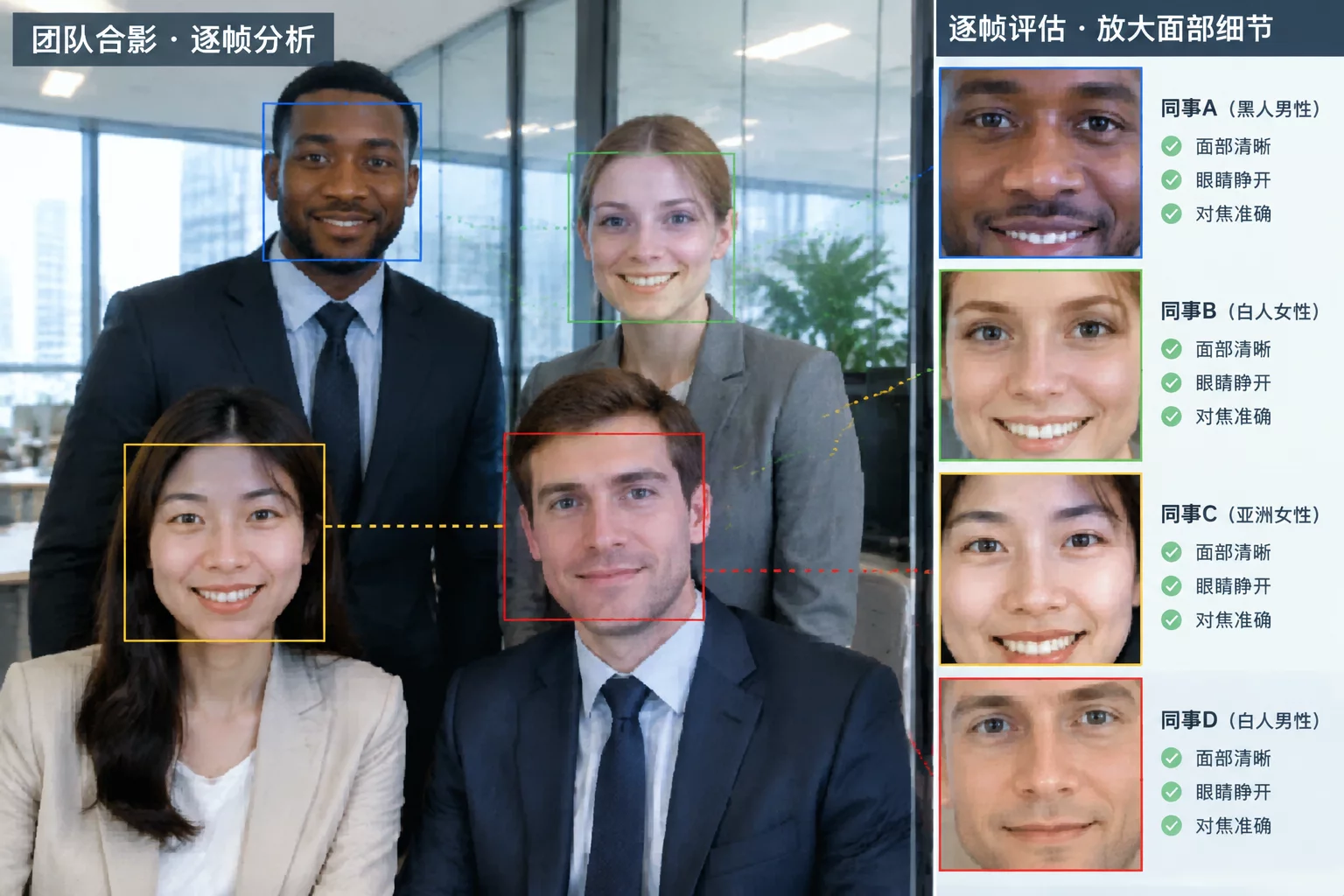
Group portraits introduce compounding variables where a single closed eye or extreme head angle invalidates an otherwise technically sound exposure. In a team of four to eight individuals, random blinking ensures that up to 40% of rapid burst frames exhibit partial eye closure. Solitary viewing can easily obscure a peripheral subject blinking while the primary subject looks pristine.
The triage stage isolates one anchor frame that satisfies overall composition, shoulder planes, and baseline illumination. Editors inspect peripheral members first, establishing whether head inclination naturally converges toward the optical center or looks awkwardly misaligned with neighboring postures.
Group Triage Specifications
- Burst Volume
- 18 to 24 frames per executive setup
- Eye Audit Tool
- Simultaneous 4-point loupe anchors at 100% zoom
- Composite Viability
- Strict neck seam and background illumination parity
- Filter Rejection Threshold
- Immediate drop on half-blink or chin shadow overlap
Head posture governs visual hierarchy within group photographs. When adjacent subjects tilt their heads in conflicting axes, the group dynamic feels disjointed. Editors look for complementary angles where head tilts remain within a 5-to-12 degree corridor relative to the vertical grid.
- Eye level lines stay aligned horizontally across adjacent subjects without extreme staggered dips.
- Jawline contours remain clear of collar fabrics and do not cast heavy down-shadows onto neighbors.
- Catchlights occupy the upper quadrants of all subjects simultaneously under key modifier coverage.
Marking candidates with synchronized head angles allows retouchers to perform head swaps seamlessly if an unavoidable micro-blink occurs on an otherwise superior posture.
The curation team moves through a strict 6-stage protocol: initial ingestion, technical pass, expression and moment pass, similar-frame comparison, shortlist, and final selection. Group portraits demand that the similar-frame comparison specifically clusters consecutive bursts shot within 1.5 seconds of each other.
Frames receiving green color tags represent complete in-camera winners where all individuals have eyes open and pleasant expressions. Yellow tags denote composite donors: clean expressions and open eyes matching the perspective of the primary base capture.
Apply these selection questions in your workspace: Selection Passes and Variants in Capture One.
Browse All Selection Cases
Explore our collection of documented culling scenarios spanning studio headshots, commercial products, and high-speed action bursts.
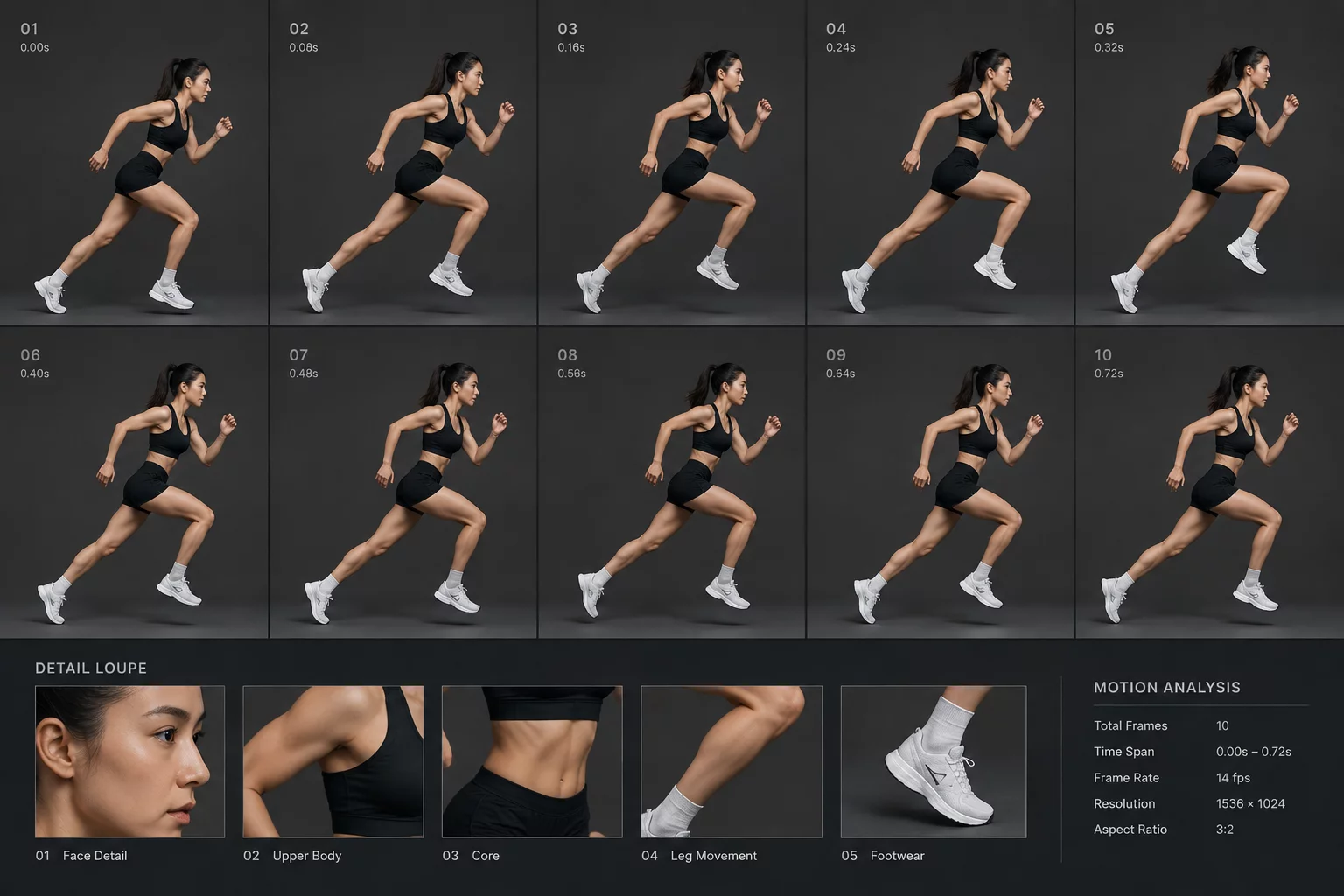
Burst Rate Action Shot Evaluation
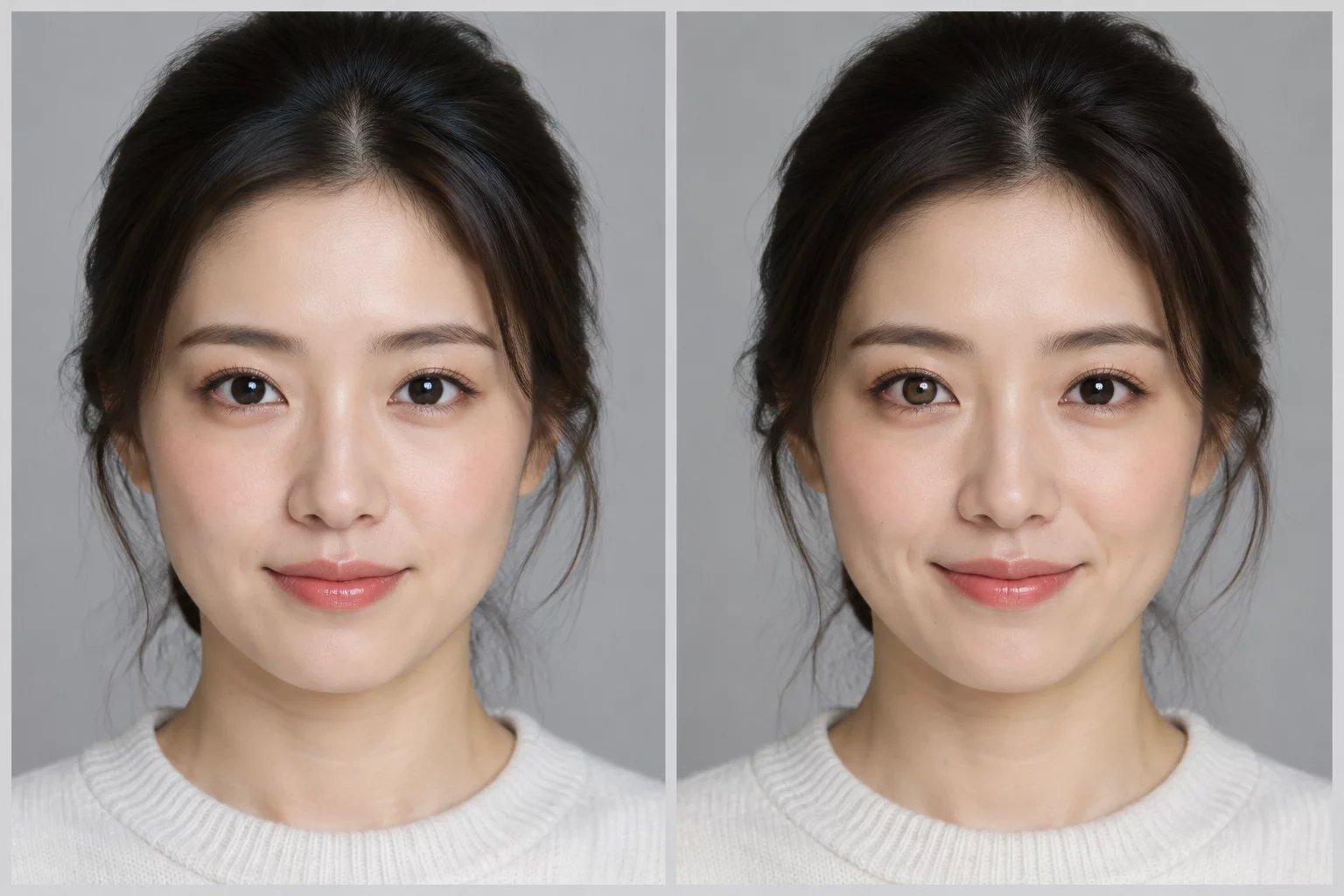
Subtle Micro-Expression Variations in Studio Portraits
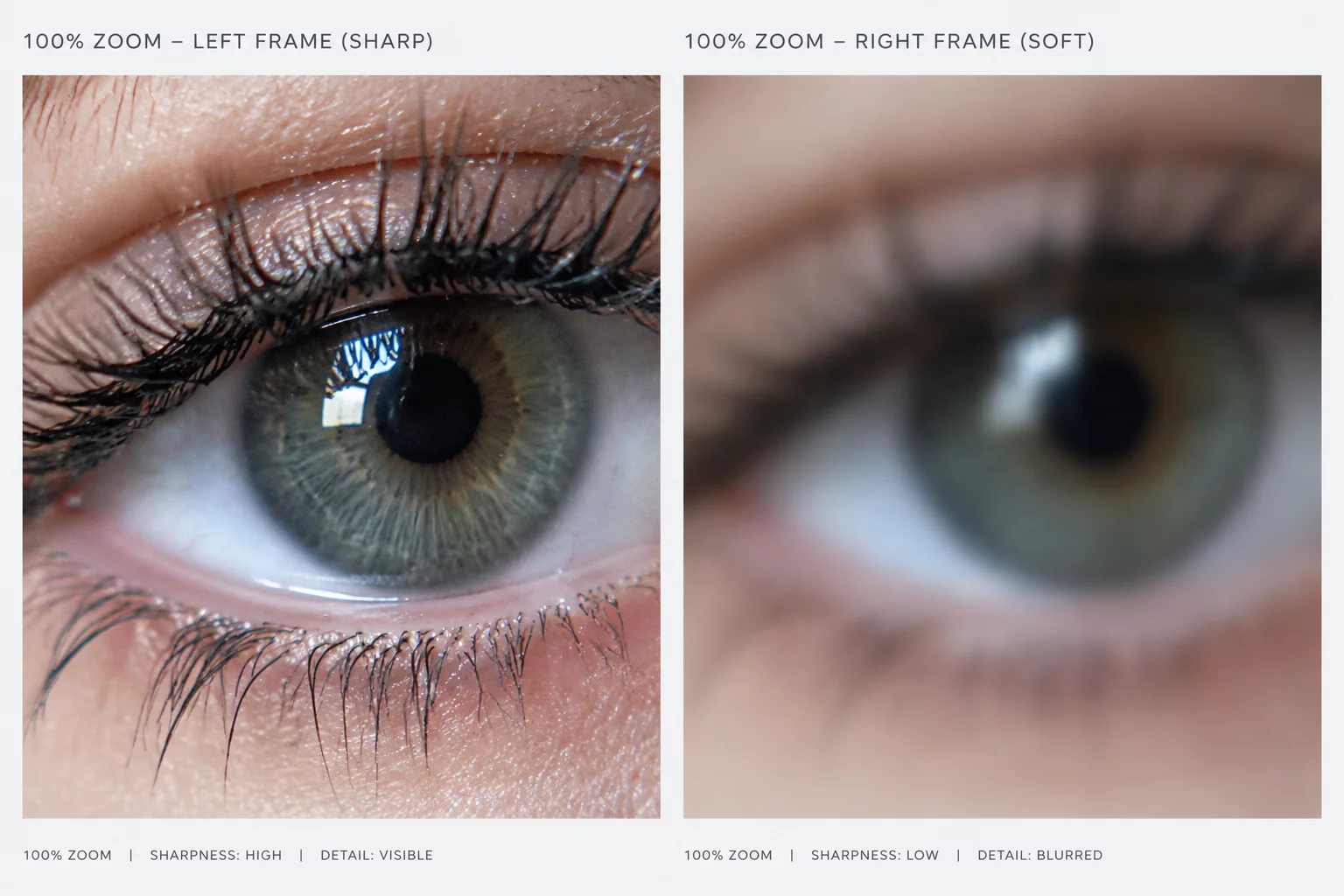
Depth of Field Falloff and Critical Focus Auditing

Elena Rostova
Lead CuratorWhen evaluating groups exceeding five people, setting up pinned multi-loupe zoom points over each set of eyes reduces the verification phase from minutes to seconds. Tagging base frames with identical lighting saves massive retouching headaches later.