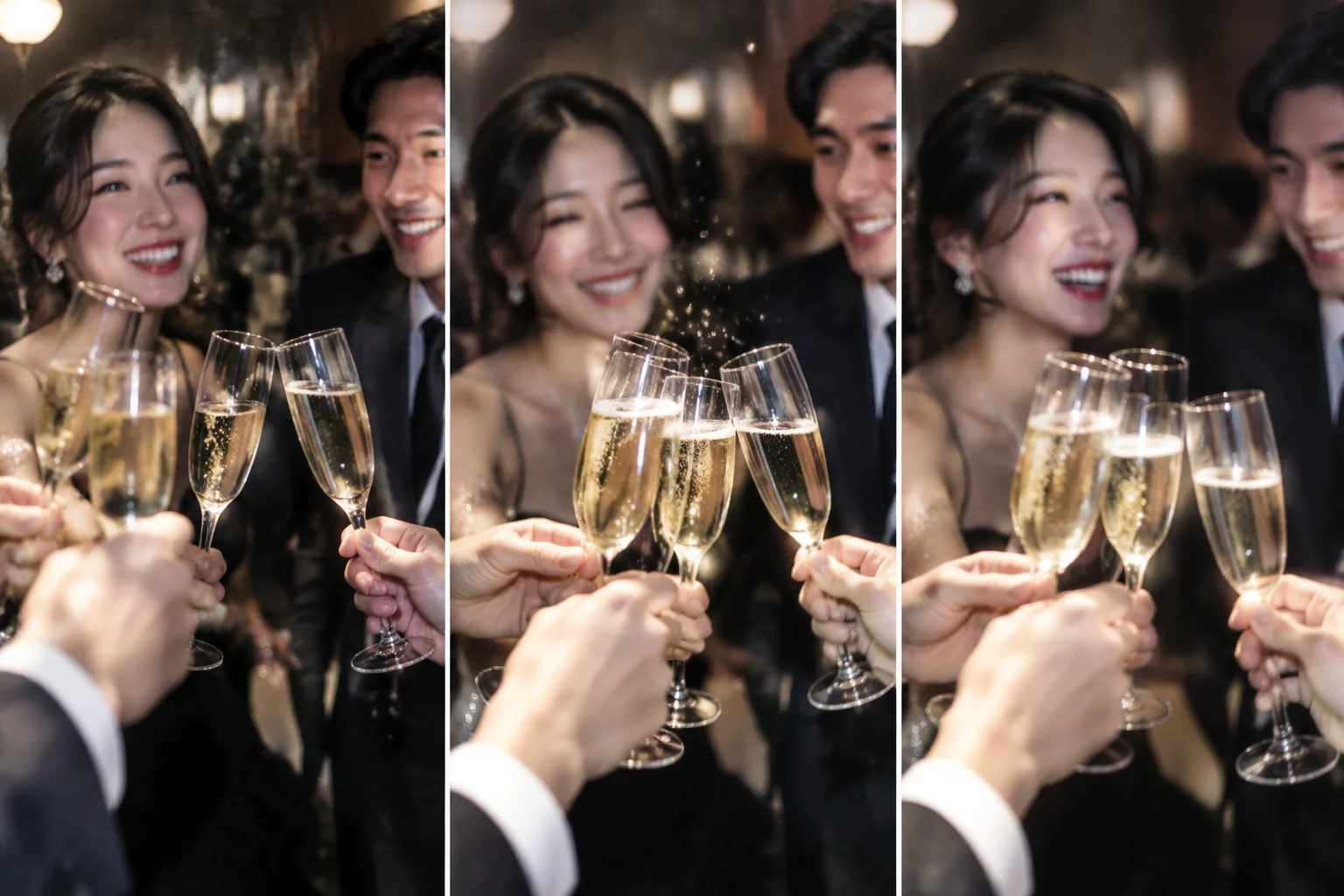
Live event shooting at continuous frame rates between 10 and 20 frames per second generates immense asset volumes around single pivotal moments. During a keynote announcement or an executive toast, human expressions shift dramatically within forty milliseconds. Culling such dense bursts requires an objective chronological sweep rather than random side-by-side guessing.
Examine the glass contact sequence below to observe how the middle frame retains ideal champagne rim placement while maintaining full pupil openness across both subjects. Later frames in the same cadence often introduce blinking reflexes or obscured facial angles caused by the glassware motion itself.
Cadence Evaluation Metrics
- Burst Duration
- 1.2 seconds (16 continuous raw files)
- Shutter Speed
- 1/500s at f/2.2 under mixed tungsten spots
- Peak Motion Frame
- Frame #09 of 16 (Optimal rim contact & eye contact)
- Rejection Factor
- Mid-blink response and glass reflection flare on Frame #11
Comparing identical looking event frames can easily trigger severe visual fatigue. To preserve editor focus, we pass candidate bursts through three strict elimination filters in Capture One before assigning deliverable status:
- Audit pupil sharpness at 100% zoom using the multi-view loupe tool.
- Verify absence of micro-blinks, half-closed lids, or strained jawlines.
- Select the single frame where secondary background subjects show neutral, uncompromised expressions.
Applying this three-stage protocol ensures only one definitive hero frame survives out of every high-speed sequence, cutting client delivery clutter by more than eighty percent while keeping catalog performance blazing fast.
Assigning stars arbitrarily across 2,000 corporate event images causes confusion between second shooters and retouchers. Instead, our standard workflow mandates color flags on burst sequences: green tags indicate confirmed hero frames, yellow flags mark alternate safety backups, and red marks technical rejects.
Once the cadence hero is verified, immediate unflagging of secondary burst frames prevents duplicate color correction work downstream. The metadata schema aligns directly with archival delivery pipelines.
Apply these selection questions in your workspace: Selection Passes and Variants in Capture One.
Capture One Selection Passes Guide
Detailed technical blueprint detailing keystrokes, contact-sheet layouts, and multi-variant comparison panels.
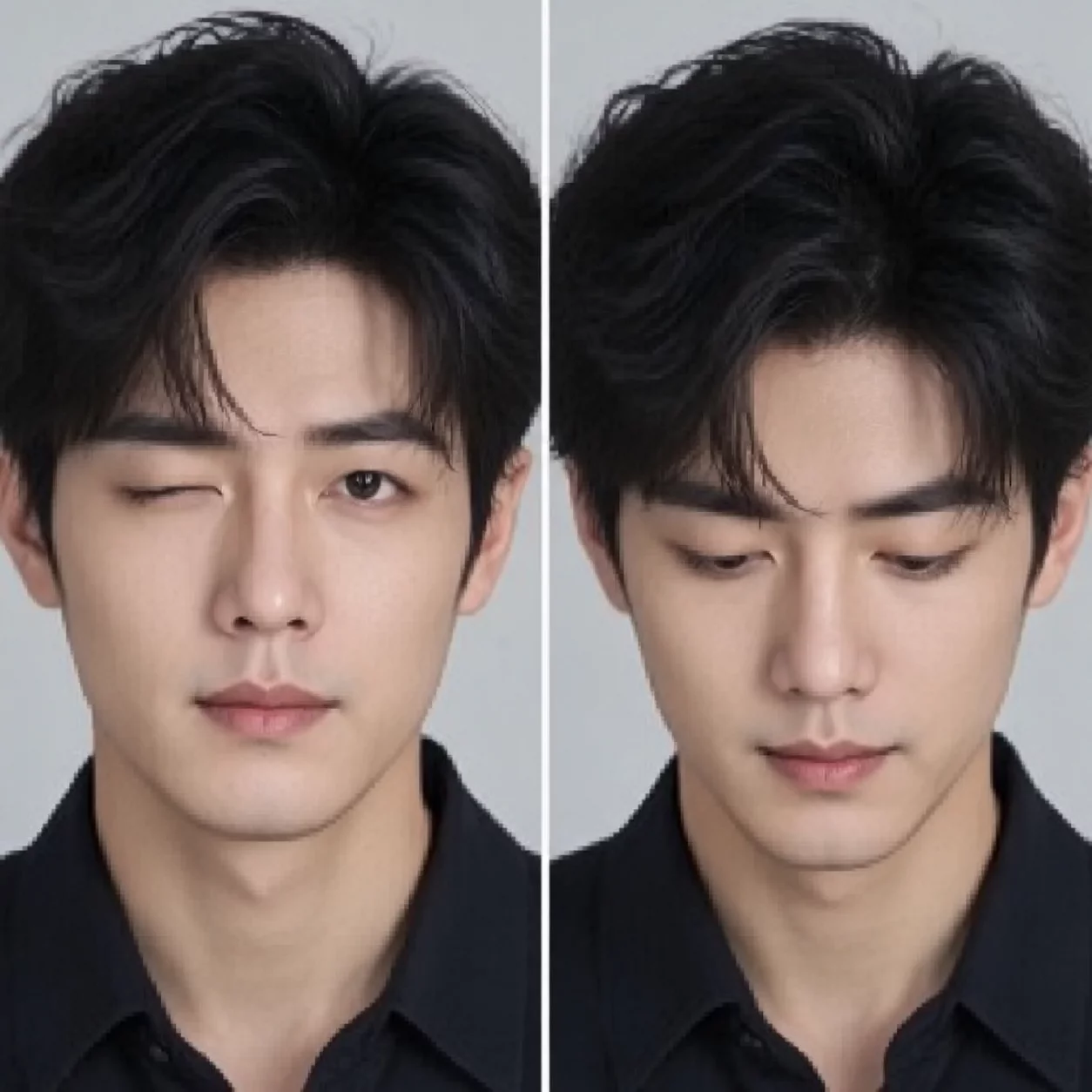
Micro-Blink Versus Intentional Downward Gaze
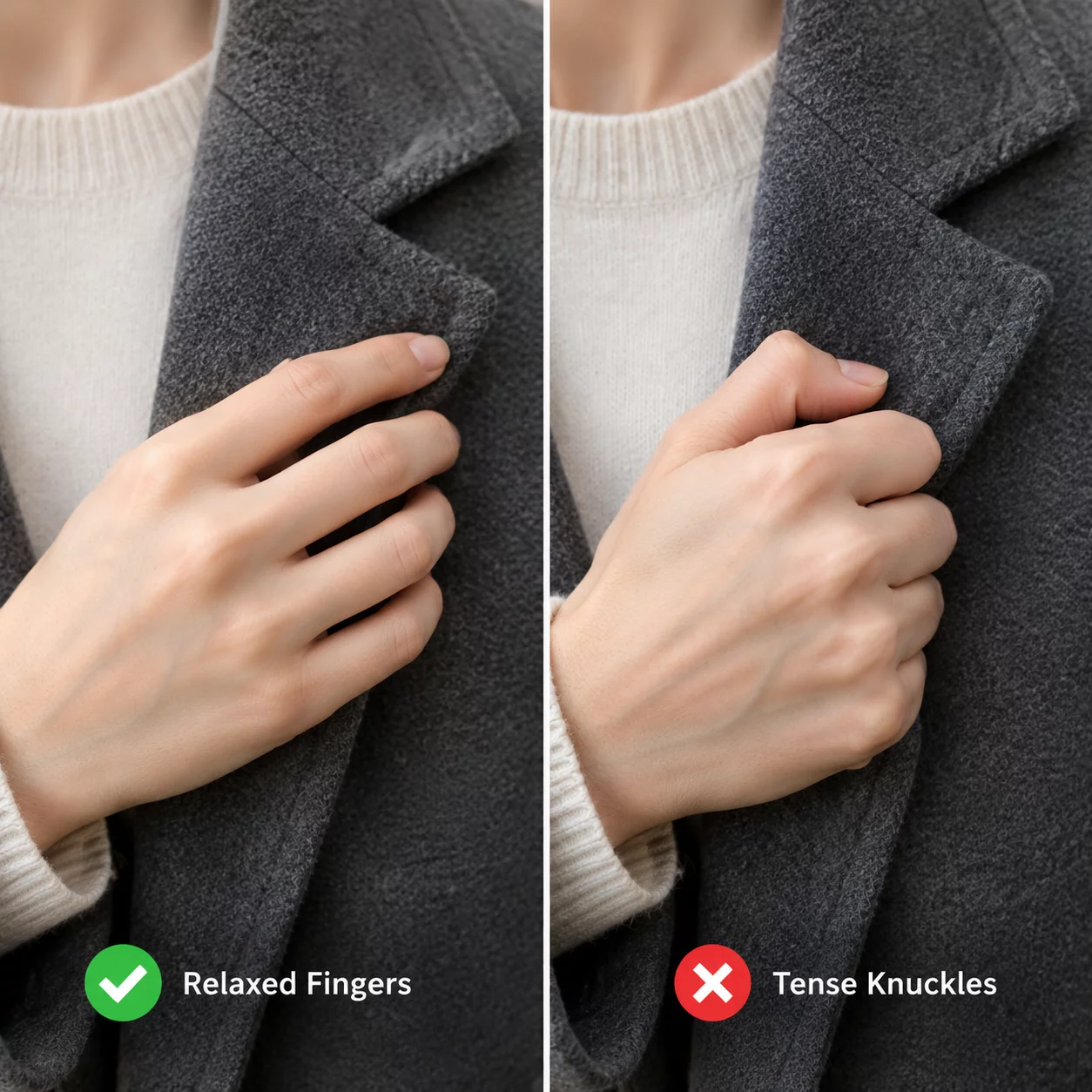
Hand Placement Micro-Adjustments in Editorial
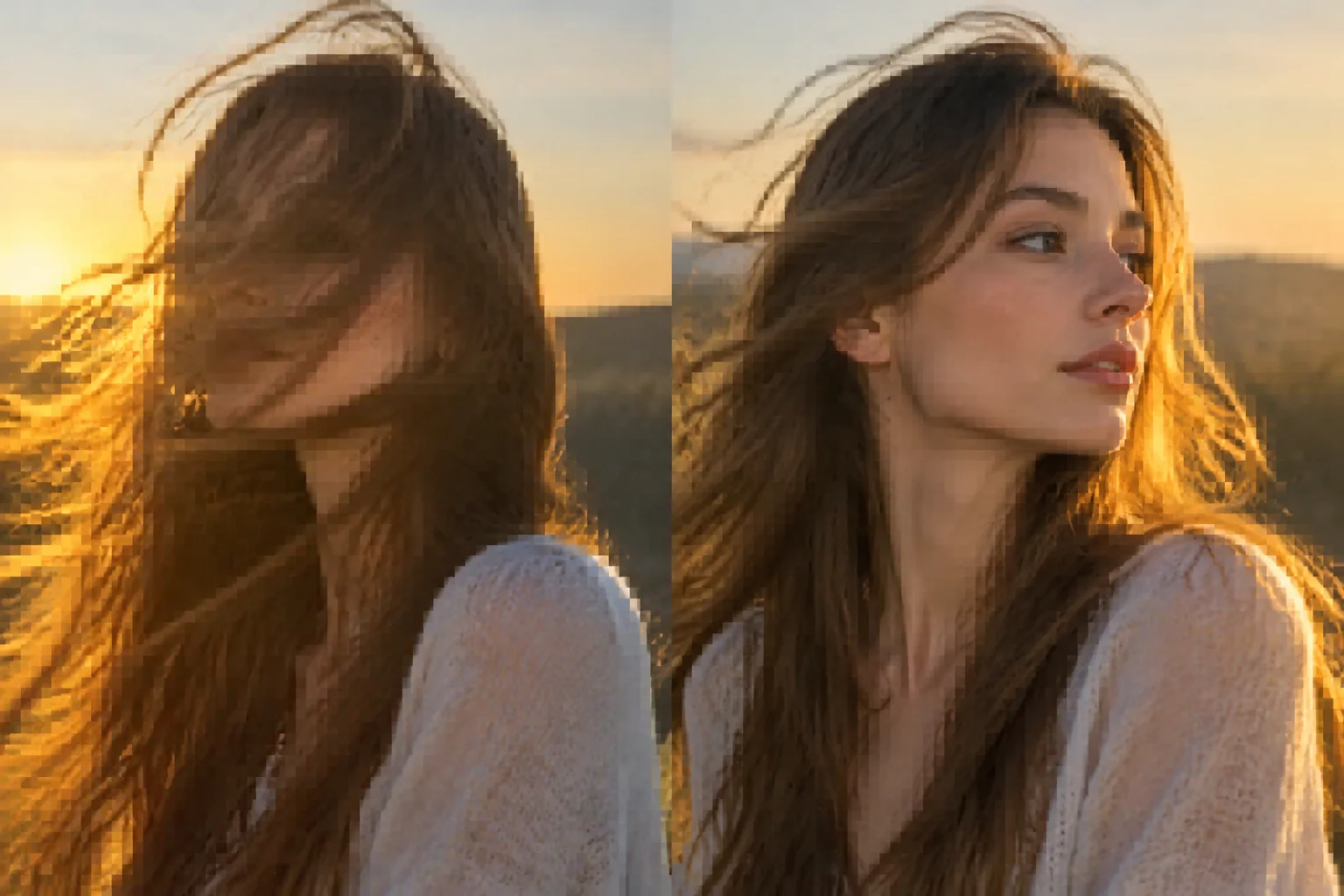
Natural Wind Hair Dispersion in Outdoor Sessions
Elena Rostova
Lead CuratorIn high-cadence event bursts, evaluating the primary speaker first and ignoring secondary background characters until Pass 3 halved our review duration. Frame #09 remains the benchmark selection for this toast sequence.