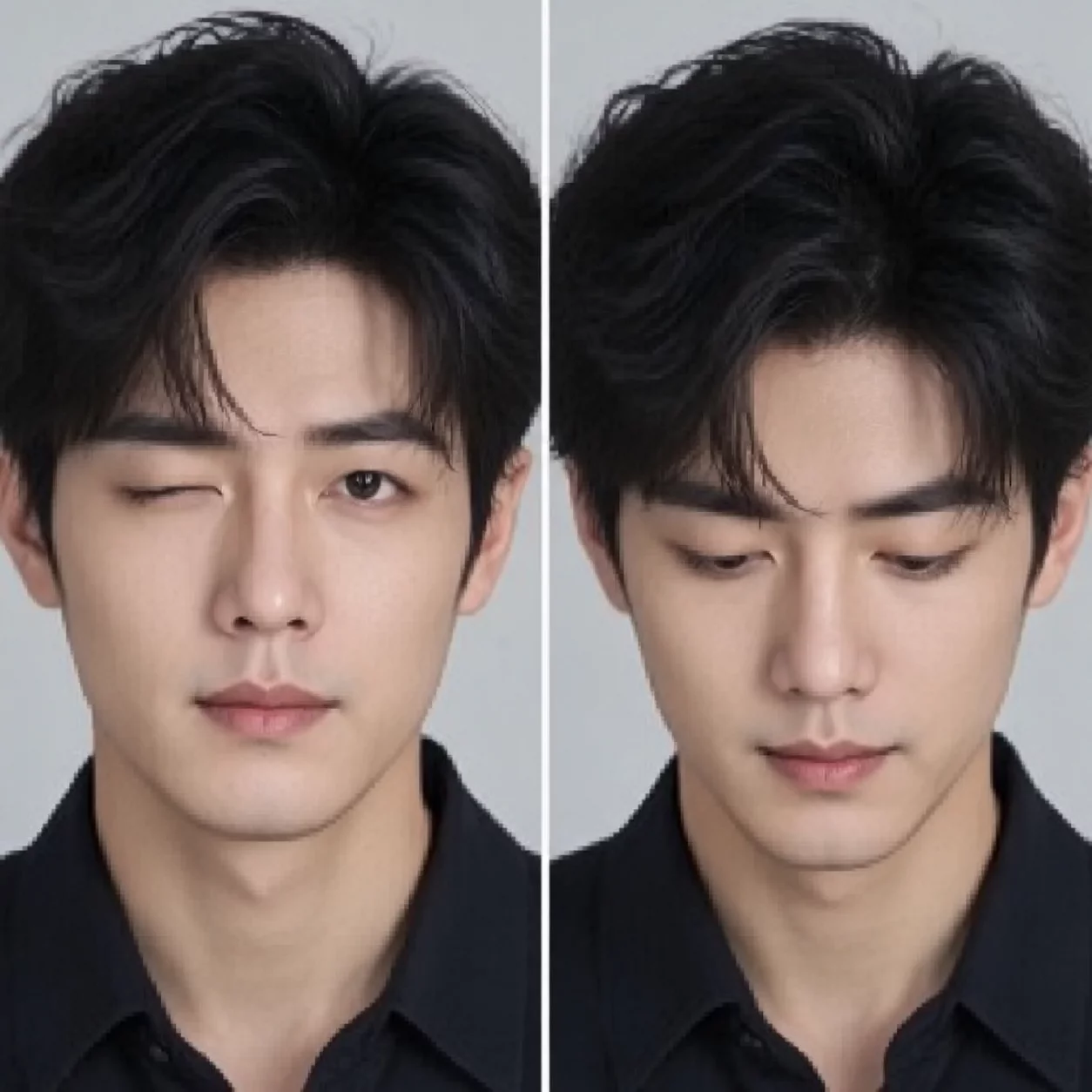
An involuntary human blink occurs in approximately 100 to 150 milliseconds, creating distinct physical markers that distinguish it from intentional downward glances. Editors often mistake a half-closed eye for a pensive gaze when reviewing rapid portrait bursts at low display zoom. Evaluating the eyelid margin at 100% loupe reveals whether the levator palpebrae muscle is in active transit or positioned in relaxed equilibrium.
During an involuntary micro-blink, the superior palpebral furrow softens and the eyelash tips display micro-motion blur even at standard flash sync speeds. Conversely, a directed downward look preserves crisp eyelash geometry, displays an intact iris contour along the lower eyelid line, and retains a coherent specular catchlight from studio key lights.
Eyelid Triage Audit Parameters
- Eyelash Edge Definition
- Tapered sharp lash follicles indicate resting position; directional blur indicates active blink transit.
- Catchlight Coherence
- Preserved corneal reflection confirms stable gaze; occluded or smeared reflection confirms reflex closure.
- Orbicularis Oculi Tension
- Unconscious squinting produces pinched lateral canthus folds absent in calm intentional styling.
- Triage Pass Action
- Tag Red flag for blink transit; assign Green flag and Star 2 for deliberate editorial down-gaze.
To avoid delivery of sleepy or uncoordinated frames to client proofing sets, implement a repeatable verification sequence inside your primary catalog software:
- Audit sequential neighbor frames captured 150ms before and after to verify eyeball motion trajectory.
- Verify iris curvature visibility along the inferior lid margin to ensure the pupil is consciously oriented.
- Check brow symmetry to detect asymmetric involuntary micro-spasms caused by modeling strobe fatigue.
Executing this check prevents accidental rejection of deliberate editorial poses while ensuring that drowsy micro-blinks never infiltrate the Tier 1 shortlist collection.
Ambiguity is the single greatest cause of client revision rounds. When an art director encounters a half-blink masquerading as a mood shot, trust in the curated package erodes rapidly. Establishing explicit triage tags ensures editorial assistants eliminate transitional frames with mathematical consistency.
Flagging intentional downward looks under a dedicated expression token allows retouchers to concentrate tonal sculpting on the eyelid crease rather than attempting reconstructive pupil synthesis in post-production.
Apply these selection questions in your workspace: Selection Passes and Variants in Capture One.
Browse All Variant Comparisons
Access the complete indexed directory of side-by-side technical triage scenarios.
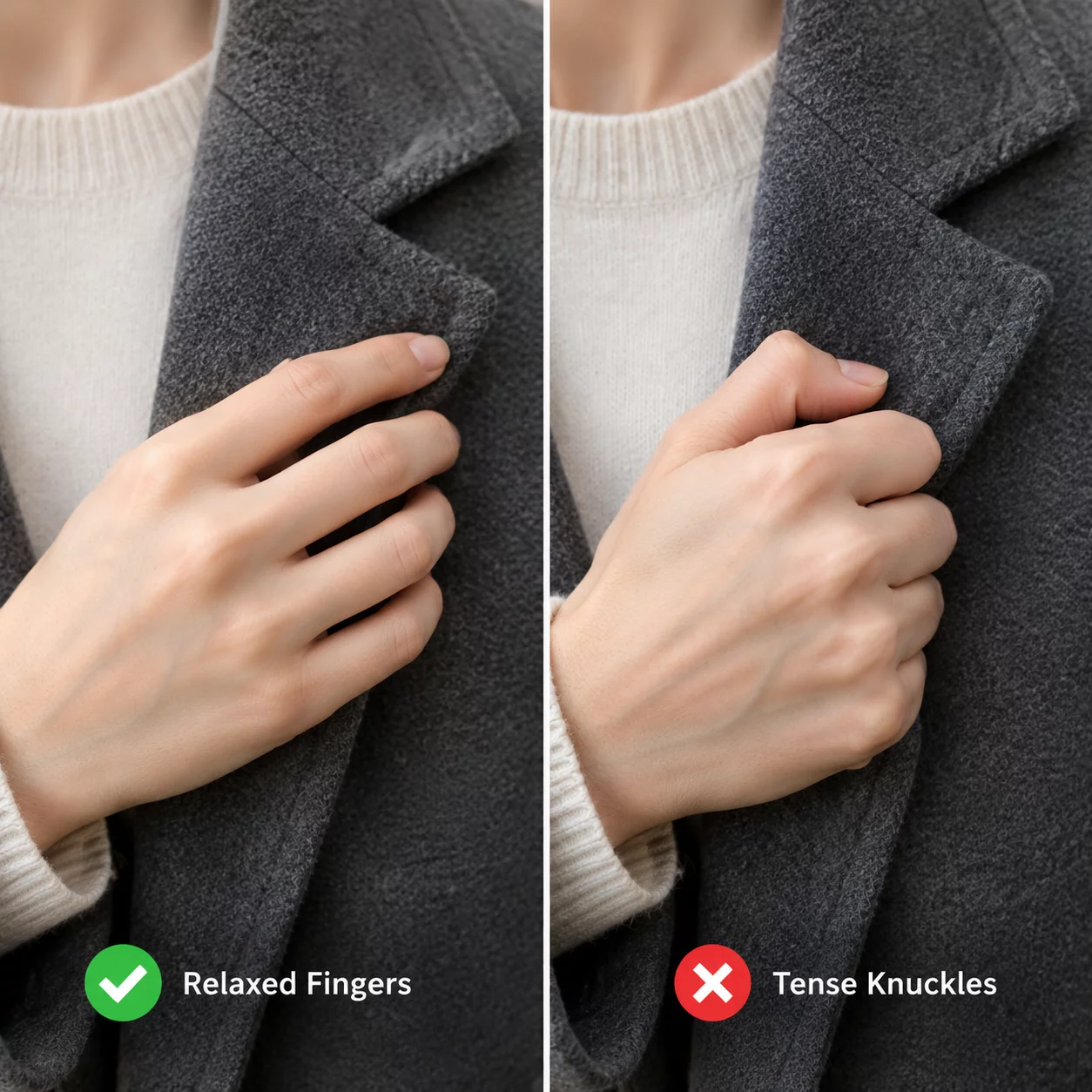
Hand Placement Micro-Adjustments in Editorial

High-Speed Shutter Cadence in Event Work

Natural Wind Hair Dispersion in Outdoor Sessions
Elena Rostova
Lead CuratorChecking the corneal catchlight edge at 100% zoom remains our fastest filter for eliminating strobe-induced involuntary half-blinks before presenting portraits to commercial clients.